Every home is a living system where structural components rely on one another to maintain strength and stability. When one element begins to weaken, the damage rarely stays localized. A minor leak in the upper framing can quietly decay load-bearing joists, while unmanaged ground moisture can compromise the foundation below. For most homeowners, the true cost of property ownership stems not from sudden natural disasters, but from silent, slow-moving structural decay that goes unnoticed until repair bills reach tens of thousands of dollars.
Preventing long-term deterioration requires looking beyond cosmetic upkeep and focusing on structural maintenance. By proactively inspecting, servicing, and reinforcing your home’s key defensive barriers—the exterior shell, the foundation, thermal boundaries, and core mechanical networks—you stop minor degradation before it threatens the building’s integrity. It’s imperative to know the essential maintenance steps needed to keep your home stable, safe, and resilient for decades to come.
Protecting the Roof and Water-Shedding Envelope
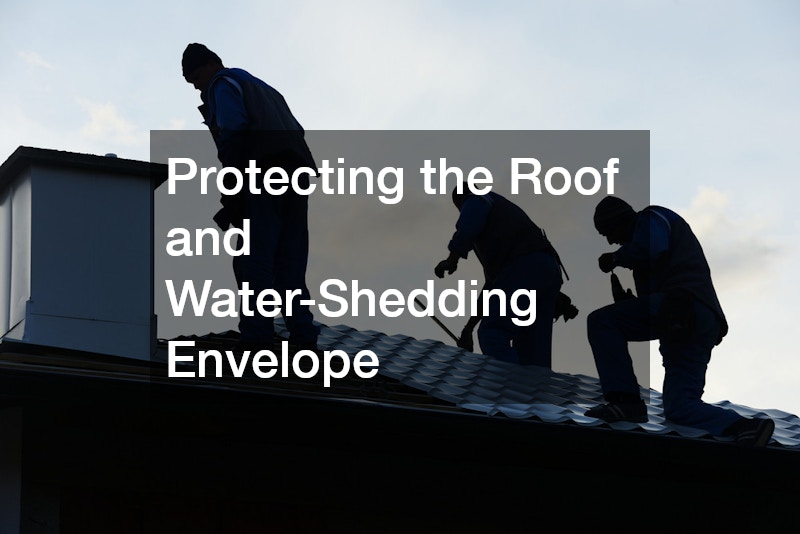
Water is the single greatest threat to a home’s structural integrity. A building’s exterior shell is engineered to shed moisture continuously, but environmental exposure slowly degrades materials over time. Once water penetrates the outer layer, it immediately targets the wood sheathing, rafters, and structural framing underneath, creating an environment ripe for rot and wood-destroying fungi.
Establishing a quarterly routine to inspect and clear your roof and water drainage systems is critical to preserving your home’s top structural layer.
- Inspect Shingle Integrity and Flashing: Look closely at high-risk areas such as roof valleys, chimneys, skylights, and vent pipes. Damaged, curled, or missing shingles allow water to pool on the underlayment, while corroded or lifted flashing gives driving rain a direct path into the attic space.
- Keep Roof Surfaces Clear of Organic Debris: Moss, fallen leaves, and pine needles hold moisture against shingle surfaces. Over time, this trapped moisture breaks down asphalt granules and rots wood shakes, drastically shortening the roof’s lifespan.
- Service Gutters and Downspouts Regularly: Ensure gutters are properly pitch-aligned toward downspouts and completely free of blockage. Standing water causes gutters to sag away from the fascia, exposing the rafter tails to continuous moisture and rot.
- Extend Downspout Discharge Lines: Water cleared from the roof must be directed far away from the structure. Downspouts should discharge rainwater at least five to six feet away from the foundation perimeter to prevent soil saturation near the base of the house.
When structural issues or advanced material decay appear across the roof surface, consulting with professional roofing services ensures that sheathing repairs and underlayment replacements are handled correctly. Furthermore, working with a reputable gutter company allows homeowners to upgrade to heavy-gauge seamless systems or custom leaf guards that effectively manage intense rainstorms without overflowing.
Reinforcing the Core Foundation and Concrete Surfaces
A home is only as stable as the ground and foundation beneath it. Foundations endure continuous stress from soil expansion, hydrostatic pressure, and freeze-thaw cycles. Left unchecked, excessive soil movement can crack concrete slabs, push basement walls inward, and destabilize the framing above, leading to misaligned doors, cracked drywall, and compromised floor joists.
Protecting the base of your home requires consistent management of perimeter moisture levels and immediate attention to surface damage.
- Maintain Consistent Perimeter Soil Moisture: Expansive clay soils swell when saturated and shrink when dry. This continuous movement places immense stress on concrete. In dry seasons, light watering near the foundation helps prevent soil shrinkage, while during wet seasons, proper grading ensures water drains away smoothly.
- Monitor and Seal Foundation Cracks: Inspect basement walls and exterior stem walls regularly. Hairline shrinkage cracks are common, but wider gaps or vertical cracks that open up over time indicate active movement that needs immediate sealing to prevent moisture penetration.
- Manage Exterior Hardscaping Slopes: Driveways, walkways, and concrete patios should slope away from the house at a pitch of at least one-quarter inch per foot. Settled slabs that tilt toward the structure act as funnels, directing large volumes of surface water straight against the foundation.
- Ensure Crawlspace and Basement Dryness: Standing water or high humidity in lower sub-structures weakens wooden support posts and sill plates. Installing heavy-duty vapor barriers or sump pump systems helps keep these below-grade environments dry.
When dealing with deep vertical cracks, bowed basement walls, or uneven floor settling, hiring experienced concrete foundation contractors is essential. Structural specialists can install foundation piers, execute carbon-fiber wall bracing, or inject structural polyurethane to stabilize shifting soil and preserve the building’s support base.
Shielding Windows and Exterior Portals from Air and Water Infiltration
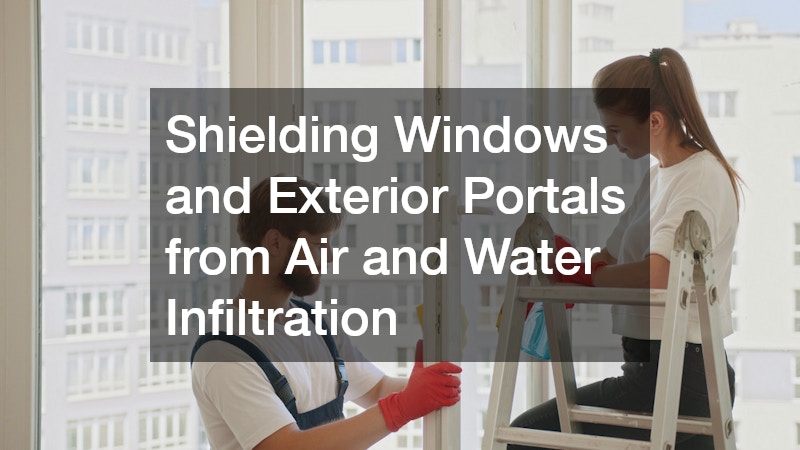
Exterior doors and window frames serve as necessary openings in a home’s structural envelope. However, because they interrupt the continuous exterior siding and framing, they are inherently vulnerable to water intrusion and thermal leakage. Defective seals around these openings allow moisture to leak into wall cavities, silently rotting header beams, wall studs, and subfloors.
Reinforcing these critical transition points requires routine maintenance and timely updates to protective seals and structural components.
- Re-caulk Frame Joints Annually: Inspect the caulking around exterior window frames and door jambs. Remove cracked or degraded sealant and reapply high-grade, flexible exterior polyurethane or silicone caulk to block air and water entry.
- Check and Replace Weatherstripping: Damaged weatherstripping allows moist outside air to meet conditioned indoor air, leading to hidden condensation around window sills and door thresholds. Replace worn rubber or foam seals every few years.
- Inspect Sill Pans and Thresholds: Ensure threshold plates on exterior doors are tightly fitted and elevated above exterior decking or slab surfaces to prevent wind-driven rain from seeping under the door pan and rotting subfloor joists.
- Manage Interior Condensation: Excessive interior moisture accumulating on window glass during cold months can trickle down into wall framing. Using exhaust fans in high-humidity zones prevents moisture from collecting on vulnerable interior sills.
Upgrading outdated entryways with a precise front door installation ensures that modern perimeter flashing, composite jambs, and thermally efficient thresholds keep moisture out of your subflooring. Additionally, incorporating professional window treatment services can help shield internal frames from harsh thermal fluctuations and excessive direct sunlight, extending the physical life of window components and reducing framing stress.
Preserving Sub-Surfaces with Thermal and Vapor Insulation
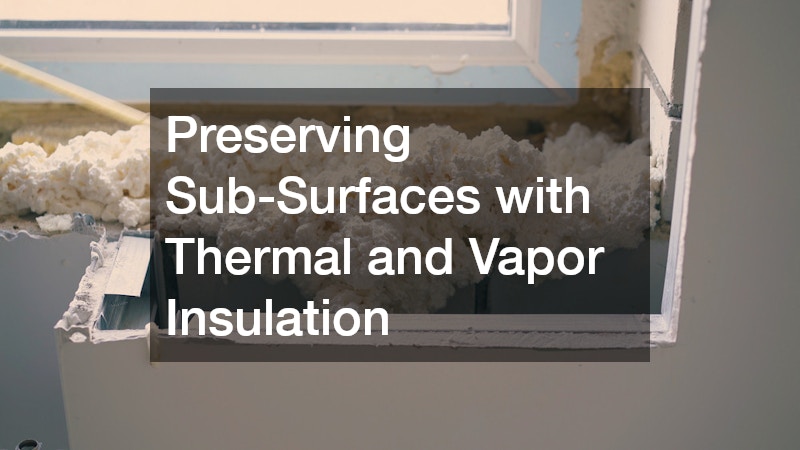
Attics, crawlspaces, and exterior wall cavities serve as the protective buffer between the outside environment and your living spaces. When these areas lack proper thermal resistance or vapor control, indoor moisture condenses on cold structural elements. Over time, this hidden condensation causes wood rot, corrodes metal fasteners, compromises structural strength, and fosters aggressive mold growth inside wall cavities.
Ensuring your home’s hidden spaces remain dry and thermally balanced requires focused inspection and appropriate material upgrades.
- Verify Attic Ventilation Efficiency: Ridge vents, soffit vents, and gable louvers must remain open and unobstructed. Proper airflow removes warm, humid air from the attic, preventing moisture from condensing on the underside of the roof sheathing during colder months.
- Install Heavy-Duty Vapor Barriers in Crawlspaces: Uncovered dirt crawlspaces continuously release moisture into structural floor joists. Covering the ground with a continuous, minimum 6-mil polyethylene vapor barrier stops moisture from evaporating into structural timbers.
- Inspect Wall Cavities for Settled Insulation: Older insulation materials can settle or compress over time, leaving uninsulated gaps at the tops of exterior walls. These thermal bridges create cold spots on interior surfaces where airborne moisture readily condenses.
- Seal Air Leaks Between Conditioned and Unconditioned Spaces: Use expanding foam or caulk around recessed lights, plumbing stacks, and electrical chases penetrating the ceiling into the attic. Blocking these pathways stops warm, moist indoor air from escaping into unconditioned roof spaces.
Consulting a certified residential insulation contractor helps homeowners identify thermal gaps and moisture movement within wall assemblies. These specialists can blow in dense-pack insulation, apply closed-cell spray foam, or install encapsulated crawlspace systems that regulate internal temperature and protect structural framing from dampness.
Safeguarding Internal Pipe Mechanics and Drainage Integrity
While exterior elements present constant threats, internal plumbing systems pose an equally significant risk to structural stability. Pressurized water pipes and gravity-fed drain lines weave through floor joists, ceiling cavities, and wall studs. A single pinhole leak or slow-draining pipe failure can saturate structural framing for months before visible signs appear on drywall or flooring, leading to severe timber decay and structural weakness.
Proactive maintenance of your home’s internal water and waste systems keeps structural wood dry and sound.
- Monitor Household Water Pressure: High municipal water pressure stresses pipe joints, flexible supply lines, and appliance valves. Installing a pressure-reducing valve keeps system pressure within a safe range of 40 to 60 PSI, drastically lowering the risk of sudden pipe bursts.
- Inspect Supply Lines Regularly: Replace aging rubber supply hoses on washing machines, dishwashers, and refrigerators with braided stainless steel lines. Check exposed supply lines under sinks for signs of corrosion or slow leaks.
- Clear Drain Lines Safely: Avoid aggressive chemical drain cleaners that eat away at older metal or plastic pipes. Instead, clear slow drains mechanically or use enzyme-based cleaners to preserve pipe walls and prevent hidden drain failures behind walls.
- Check Water Heater Tanks for Corrosion: Water heaters typically last 8 to 12 years. Inspect the anode rod periodically and replace aging tanks before bottom-pan corrosion causes sudden flooding that ruins subfloors and structural joists.
Partnering with a licensed plumbing company for annual inspections ensures that hidden pressure drops, slow slab leaks, and corroded pipe runs are caught long before water damages structural framing. For stubborn main-line blockages or root intrusions, professional drain cleaning clears obstructions safely without damaging underground drain pipes or backed-up main stacks.
Controlling Indoor Climate and Air Circulation Networks
Heating and cooling systems do far more than manage temperature; they regulate internal humidity levels and drive air movement throughout the home. Excess indoor humidity softens drywall, causes hardwood floors to warp, and encourages fungal growth inside wall framing. Conversely, poorly balanced air movement creates uneven temperature zones that cause materials to expand and contract excessively, straining structural joints over time.
Optimizing indoor climate control networks ensures that structural components remain in a stable, low-stress environment.
- Maintain Ideal Indoor Relative Humidity: Keep indoor humidity levels between 30% and 50% year-round. Use whole-home dehumidifiers during humid summer months and humidifiers during dry winters to minimize wood expansion and shrinkage.
- Change Air Filters Regularly: Clogged HVAC filters restrict airflow, causing system coils to freeze and condensate pans to overflow directly onto structural flooring or ceiling framing below.
- Inspect Air Ducts for Sealing and Insulation: Leaky air ducts in unconditioned attics or crawlspaces draw in damp air and lose cooling efficiency. Seal duct joints with foil tape or mastic sealant, and ensure ductwork remains fully insulated to prevent condensation drips.
- Balance Supply and Return Air Register Flows: Ensure return vents are never blocked by furniture or rugs. Balanced air pressure prevents unconditioned, moist outside air from being sucked into exterior wall cavities through small structural gaps.
- Clear and Inspect Condensate Drain Lines Seasonally: Flush air conditioner condensate lines with vinegar or water to prevent algae buildup from clogging the line, which can back up drain pans and cause unseen ceiling or subfloor rot.
Engaging experienced HVAC contractors for semi-annual system tuning keeps cooling coils, condensate drain pans, and blower motors operating reliably without overflowing or leaking water into floor systems. Furthermore, arranging for targeted air duct repairs seals air leaks throughout the ventilation network, lowering energy costs while keeping structural spaces free from trapped moisture and condensation buildup.
Protecting a home from long-term structural deterioration is fundamentally about consistency and foresight. Every building relies on a chain of protective systems—from the roof overhead and the drainage around the foundation to the thermal boundaries in the walls and the mechanical lines running through the framing. When any one of these defenses is allowed to fail, the entire structure becomes vulnerable to silent, compounding damage.
By shifting from a reactive mindset to a routine maintenance approach, you can catch minor issues before they transform into catastrophic structural repairs. Regularly checking seals, controlling indoor humidity, managing surface water, and servicing core utility systems ensures that your home remains safe, stable, and valuable. Taking care of your property’s structural health today guarantees that it will continue to protect your family and preserve your equity for generations to come.