Choosing the right material for your driveway is a significant decision that impacts your home’s curb appeal, functionality, and long-term maintenance costs. Concrete and pavers are two of the most popular options, each offering unique benefits and considerations. Understanding their cost, durability, and aesthetic potential can help homeowners make an informed choice. In this article, we compare concrete and pavers, highlighting key factors to consider before starting your driveway project.
What are the Cost Differences Between Concrete and Pavers?
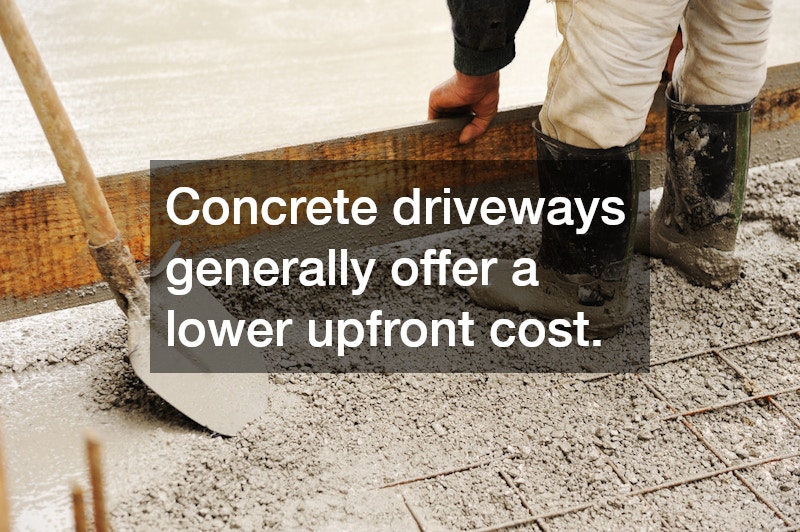
Concrete driveways generally offer a lower upfront cost compared to pavers. The materials themselves are inexpensive, and pouring a standard slab can often be completed relatively quickly.
However, installation costs can vary depending on driveway size, thickness, and any additional finishes such as stamping or staining. Pavers, on the other hand, typically involve higher initial costs due to both the materials and labor. Each paver must be individually placed, and the process often requires a detailed sub-base to ensure long-term stability. While more expensive upfront, the investment can be justified by the visual appeal and long-term performance of a well-installed paver driveway. Hiring a skilled paving contractor is critical to ensure proper installation, as mistakes can lead to shifting, uneven surfaces, or water pooling.
Concrete driveways are prone to cracking over time, especially in climates with extreme temperature fluctuations. Repairs often require patching or resurfacing, which can be costly. Sealing concrete every few years helps extend its lifespan but adds to the overall maintenance. Paver driveways are easier to maintain in the long run. Individual pavers can be replaced if damaged without disturbing the entire surface. Additionally, pavers are less likely to crack under normal conditions. While occasional re-sanding of joints and sealing may be necessary, these tasks are typically less invasive and more cost-effective than major concrete repairs.
Both concrete and pavers can enhance curb appeal, but pavers often add a perceived premium due to their aesthetic versatility. A professionally designed paver driveway can make a home stand out in the neighborhood, potentially increasing resale value. Concrete driveways, while functional and clean-looking, are often viewed as standard and may not provide the same “wow” factor to potential buyers.
How Do Durability and Longevity Compare?
Concrete performs well in moderate climates but can be vulnerable to freeze-thaw cycles, leading to cracks and spalling in colder regions. Hot climates may cause concrete to expand and discolor over time. Pavers, being individual units with flexible joints, handle temperature fluctuations more effectively. Rainwater can seep through joints rather than pooling, reducing hydrostatic pressure and minimizing weather-related damage. This makes pavers a favorable choice for areas with heavy rainfall or harsh winters.
Concrete offers a strong, continuous surface capable of supporting heavy vehicles. However, it can develop hairline cracks under repeated weight and pressure, particularly if not properly reinforced. Pavers distribute weight across multiple units, which makes them resilient to minor settling and shifting. This durability ensures a long-lasting driveway that can withstand both foot traffic and vehicles without significant damage. A professional paving contractor can install pavers with a properly compacted base, further enhancing their resistance to wear and tear.
Concrete repairs often require cutting out damaged sections or resurfacing large areas, which can be disruptive and visually noticeable. Conversely, paver driveways allow for targeted repairs by removing and replacing individual pavers. This flexibility simplifies maintenance and reduces costs over time. Additionally, pavers may require occasional leveling if minor settling occurs, which is a relatively straightforward task for a skilled installer.
Which Option Offers More Aesthetic Flexibility?
Concrete offers design possibilities through stamping, staining, and coloring, allowing for a variety of patterns and finishes. However, the options are generally limited compared to pavers. Pavers provide almost limitless possibilities in design. Homeowners can choose from multiple shapes, sizes, colors, and textures, creating intricate patterns or borders. This level of customization allows for a personalized driveway that complements architectural style and landscaping.
The interlocking nature of pavers makes it possible to create curved driveways, patterned mosaics, and even multi-colored designs. Concrete customization is usually limited to surface textures or staining, making pavers the better option for homeowners seeking a unique, visually striking driveway.
Paver driveways integrate seamlessly with landscaping features such as flower beds, retaining walls, and patios. Their modular structure allows for smooth transitions between different outdoor elements. Concrete driveways, while functional, may appear more rigid and less adaptable to creative landscaping layouts. Hiring a skilled paving contractor ensures that your chosen driveway material—whether concrete or pavers—is installed in harmony with your outdoor design, enhancing both aesthetics and functionality.
When deciding between concrete and pavers for your driveway, consider cost, durability, maintenance, and aesthetic goals. Concrete offers a lower initial investment and a clean, continuous surface, but it may require more maintenance over time. Pavers provide long-term flexibility, resilience, and design versatility, though they come with higher upfront costs. By evaluating your priorities and consulting with a professional paving contractor, you can select the option that best meets your needs. A well-installed driveway—whether concrete or pavers—enhances curb appeal, adds value to your home, and provides a durable surface that can be enjoyed for years to come.